Showing posts with label Strength training. Show all posts
Showing posts with label Strength training. Show all posts
Wednesday, 1 November 2017

Thursday, 22 June 2017
4 Proven Ways to Build Strength & Power
Developing maximal strength adaptations is beneficial for everyone from elite athletes to the elderly and everyone in between.
Because strength is key for most of the population, human performance researchers and sports scientists have teamed up over the past few decades in order to determine how to maximize progress with the latest scientific training protocols.
Essentially these researchers have been looking for the safest and most effective way to manipulate certain variables of training such as load, intensity, volume frequency and exercise selection.
Within this article I will provide you with four of the most recent breakthroughs in human performance research to help YOU build maximal strength in the shortest possible time!
From increasing your squat to help your legs and glutes grow, to improving sports performance, the methods in this article will give you the background and knowledge you need to maximize your current workouts.
Here are 4 scientifically backed tips to help you build strength.
Background: Principles of Strength Training
Before we dive in, it’s important for me to give you a quick review of the basic principles of strength training.
While the latest training technique with bands or chains may seem sexy, like everything, the main principles of strength training that were discovered years ago that are still key today.
For example, here are some of the key and fundamental principles of strength training you must master and focus on:
- Load/weight on the bar,
- Number of sets,
- Repetitions,
- Changes in exercise selection,
- Rest period length,
- Careful manipulation of volume (sets x reps),
- Intensity … these must all be accounted for (1).
Essentially, in order to continually force your body to adapt to strength training, you have to train with sufficient loads that are going to challenge your musculoskeletal system.
Recent research suggests that for untrained individuals to maximize strength training adaptations they need to train with at least 60% 1RM, 3 days per week, 4 sets per muscle group.
However, for trained athletes, a mean training intensity of 85% 1RM, 2 days per week, 8 sets per muscle group has been shown to enhance muscular strength (2).
In short, you need to lift heavy, several times per week, progress the weights, stay consistent and eat well
Now we’ve covered the basics, you’re ready to take your strength training to the next level with these four tips!
1. Linear Periodization To Maximize Strength Gains
Periodization refers to the systematic (orderly) variation of key training variables.
There have been several different periodization models that have been shown to provide favorable strength adaptations (3).
The first model of periodization to gain traction was Linear or Traditional periodization. This consists of several training blocks starting at high volumes with low intensities and gradually progressing to periods of high intensity and low training volumes (4).
In less technical terms, you would start with lots of sets but less weight then switch to higher weight with less sets.
While this has been effective for many, linear periodization can be slightly boring within a training regimen due to infrequent variations or changes in exercises etc. Also, linear periodization may increase the athlete’s risk of overreaching as they repeat the same exercises etc. (5).
2. Non-linear or Daily Undulating Periodization To Maximize Strength Gains
Recent research has brought to light a new model of periodization referred to as nonlinear or daily undulating, in which volume and intensity are varied on a daily basis (rather than every 1-2 months like above).
For example, in a linear approach you may do 6 weeks of hypertrophy training, 4 weeks of strength training, followed by 3 weeks of power training. However, in a NON-linear or Daily Undulating Periodization approach you may perform a hypertrophy, power and strength workout all in one week!
This model of periodization seems to provide athletes with more frequent variations in volume and intensity and may reduce boredom, injury risk and actually result in improved maximal strength training adaptations as the body is provided with new and unique stimuli multiple times in one week.
In fact, one group of researchers directly compared traditional periodization to non-linear on maximal strength training adaptations.
27 strength trained men were split into three groups non-periodized, linear-periodized, and non-linear and each followed their respective training regimen for 12 weeks.
At the conclusion of training effect sizes revealed that non-linear periodization resulted in improved maximal strength training adaptations on the leg press and bench press
(4.6KG & 2.9KG VS 1.1KG & 0.6KG) respectively (6).
These results have been replicated on various occasions; another group of researchers ran a similar investigation and demonstrated average strength gains on the bench press and leg press to be 14.4% and 30.1% greater following a non-linear model (7)!
How to Apply Non-Linear Periodization to Maximize Strength
The benefits of a non-linear approach are that it provides the athlete or lifter more flexibility in organizing their workouts. If your goal is maximal strength on the “big three lifts”, an example routine following a non-linear approach is listed below.
Monday: Squat, Bench Press, Dead Lift – Hypertrophy
Wednesday: Squat, Bench Press, Dead Lift – Power
Friday: Squat, Bench Press, Dead Lift – Strength
3. Applying Resistance Bands to Maximize Strength Gains
Once you have your weekly routine planned out, another way you can maximize strength gains is by adding variable resistance training techniques such as elastic bands.
Elastic resistance bands have previously been shown to improve both strength and power adaptations in highly trained athletes.
In theory, overloading the eccentric portion (lowering) of a lift with added resistance from the bands may force the neuromuscular system to recruit more type two fibers, increasing maximal strength gains (8).
One study particularly applied resistance bands to a non-linear strength training plan. These researchers took 14 college athletes and split them into two conditions.
The control group followed the same workouts without resistance bands. However, the banded group added 30% of their 1RM in band tension on the back squat and bench press exercises on their power days.
After 5 weeks of training the resistance bands group demonstrated greater improvements in rate of power development, back squat 1RM and bench press 1RM (9)!
You can order these bands from stores such as EliteFTS or MyProtein.


4. Creatine Monohydrate to Maximize Strength Gains
Once you’ve effectively applied the basics including overload, progression, non-linear periodization and variable resistance training you’re ready for the final piece of the puzzle, creatine monohydrate!
Creatine is arguably the most effective and widely used sports supplement and rightly so.
Creatine works by increasing the amount of readily available ATP energy in the muscle. ATP is the energy system that fuels high power/strength activities, helping our muscles contract and produce force. It’s basically like the gasoline to your car, it provides all our cells with energy to function.
One group of researchers examined the effects of creatine supplementation on strength and strength endurance in highly trained power lifters.
At the conclusion of training, strength gains on the bench press increased by 20lbs in the creatine group compared to only 5.6 in placebo. That’s a 400% greater increase!
In regards to strength endurance, the creatine group demonstrated average increases of 39.7% compared to only 7.1% in the placebo, over 500% greater gains! (10)
But before you ask, this wasn’t just a one-off or poorly designed study. These results have been replicated time and time again and researchers conclude that creatine just may be the most effective supplement for strength and power gains as well as muscular growth (11).
In fact, research has demonstrated an average increase of 4.4lbs of muscle mass when taking creatine paired with resistance training compared to no creatine (12). It’s also extremely safe, cheap to buy (a bottle is $10) and healthy!
Time To Maximize Your Strength Gains!
There you have 4 effective and research-proven techniques to boost your strength. For most, working on the basics first will provide the biggest reward. If you are highly advanced, using techniques such as resistant bands, forced reps, cluster sets etc. can also help bust plateaus and provide quick improvements. Learn more about Advanced Training Technique tips in this article: https://www.rudymawer.com/blog/5-advanced-workout-methods-for-rapid-muscle/
- Before adding any special tips into your strength training regimen make sure you have your basic principles in check. These include the chronic alteration of load, number of sets, repetitions, exercise selection, order, rest period length and the careful manipulation of volume and intensity.
- Next, non-linear periodization or DUP provides you with more frequent variation of volume and intensity which has been shown to lead to improved strength adaptations (you may also enjoy it more as your routine changes within a week).
- Adding resistance bands to your big three lifts (squat, bench, deadlift) may help optimize strength and power development by providing added resistance throughout the entire strength curve.
- Lastly, supplementing with creatine will help you train harder and quickly improve your strength gains. It’s also extremely effective for adding muscle mass, safe, low in cost and provides health benefits.
1.) Kraemer, W. J., Adams, K., Cafarelli, E., Dudley, G. A., Dooly, C., Feigenbaum, M. S., … & Newton, R. U. (2002). American College of Sports Medicine position stand. Progression models in resistance training for healthy adults. Medicine and science in sports and exercise, 34(2), 364-380.
2.) Peterson, M. D., Rhea, M. R., & Alvar, B. A. (2004). Maximizing strength development in athletes: a meta-analysis to determine the dose-response relationship. The Journal of Strength & Conditioning Research, 18(2), 377-382.
3.) Stone, M. H., O’bryant, H. S., Schilling, B. K., Johnson, R. L., Pierce, K. C., Haff, G. G., & Koch, A. J. (1999). Periodization: Effects of Manipulating Volume and Intensity. Part 2. Strength & Conditioning Journal, 21(3), 54.
4.) Willoughby, D. S. (1993). The Effects of Mesocycle-Length Weight Training Programs Involving Periodization and Partially Equated Volumes on Upper and Lower Body Strength. The Journal of Strength & Conditioning Research, 7(1), 2-8.
5.) Zourdos, M. C. (2017). Physiological responses to two different models of daily undulating periodization in trained powerlifters.
6.) Monteiro, A. G., Aoki, M. S., Evangelista, A. L., Alveno, D. A., Monteiro, G. A., da Cruz Piçarro, I., & Ugrinowitsch, C. (2009). Nonlinear periodization maximizes strength gains in split resistance training routines. The Journal of Strength & Conditioning Research, 23(4), 1321-1326.
7.) Rhea, M. R., Ball, S. D., Phillips, W. T., & Burkett, L. N. (2002). A comparison of linear and daily undulating periodized programs with equated volume and intensity for strength. The Journal of strength & conditioning research, 16(2), 250-255.
8.) Anderson, C. E., Sforzo, G. A., & Sigg, J. A. (2008). The effects of combining elastic and free weight resistance on strength and power in athletes. The Journal of Strength & Conditioning Research, 22(2), 567-574.
9.) Joy, J. M., Lowery, R. P., de Souza, E. O., & Wilson, J. M. (2016). Elastic bands as a component of periodized resistance training. The Journal of Strength & Conditioning Research, 30(8), 2100-2106.
10.) Kelly, V. G., & Jenkins, D. G. (1998). Effect of oral creatine supplementation on near-maximal strength and repeated sets of high-intensity bench press exercise. The Journal of Strength & Conditioning Research, 12(2), 109-115.
11.) Buford, T. W., Kreider, R. B., Stout, J. R., Greenwood, M., Campbell, B., Spano, M., … & Antonio, J. (2007). International Society of Sports Nutrition position stand: creatine supplementation and exercise. Journal of the International Society of Sports Nutrition, 4(1), 6.
12.) Kreider, R. B. (2003). Effects of creatine supplementation on performance and training adaptations. Molecular and cellular biochemistry, 244(1-2), 89-94.
https://www.rudymawer.com/blog/4-tips-build-strength/
Tuesday, 20 June 2017
The Scientific Reason Women Need to Go Heavy
Tip: The Scientific Reason Women Need to Go Heavy
How heavy? Here's the science.
Luckily, most women aren't afraid to lift weights these days, but many still avoid going too heavy. We're talking about sets of around 3 maximal reps here. Too bad for them, because females may benefit from heavy training even more than men.
Growth Hormone and Female Lifters
It all comes down to growth hormone. Where the male body relies more on testosterone to reap the benefits from weight training, the female body relies a bit more on growth hormone. Natural growth hormone plays a big part in both muscle and bone development. It also improves metabolic function and staves off tissue breakdown.
So, GH is good. And heavy lifting stimulates more growth hormone release in women.

The Study
One study on women looked at the effects that different kinds of weight training had on growth hormone. Researchers found that growth hormone was responsive to moderate (around 12 reps) and heavy (around 3 reps) lifting regimens.
"Since women rely on growth hormone to increase muscle and bone strength, the more growth hormone stimulated by a type of exercise, the better its outcome," researchers said.
The study had women weight training with different rep ranges for 24 weeks, complete with lots of blood tests. The heavier weight training protocols produced more biologically active growth hormone. Lead researcher William J. Kraemer noted: "Women need to have a heavy loading cycle in their resistance training routines."
Now, there's muscle-building value in lifting lighter weights too, like increased time under tension. But this study tells us that women shouldn't get stuck in the pattern of using only higher rep schemes and "going for the burn." Those heavy sets, as heavy as 3 grunting reps, may be where a lot of the magic happens.

https://www.t-nation.com/training/tip-the-scientific-reason-women-need-to-go-heavy
Friday, 7 April 2017
Sunday, 12 March 2017
Tuesday, 7 March 2017
3 Great Exercises to Help You Get the Perfect Behind

It’s impossible to imagine a having a beautiful figure overall without the presence of a beautiful behind. The good news is that you don’t need to go to the gym all the time to achieve this — you can manage it just as easily by doing a workout at home, provided it’s the right one.
All you need for this however is a pair of dumb-bells (or heavy books), a yoga mat, and a strong enough desire for self-improvement.
This particular exercise scheme to get the perfect behind was developed by fitness trainer Angela Lee, who suggests that you should maintain it for thirty days.
Timetable:

The numbers in each box indicate the number of reps you should do for each day that the scheme lasts. You should do the workout in bursts lasting for 2-3 minutes, with a break of 1 minute imbetween. The workout should never take longer than about 11 minutes ever day. And don’t ignore the days when you should be resting — your muscles need time to regain strength.
1. The basic exercise

2. The exercise with dumb-bells

For this exercise you need to stand straight, with your legs placed slightly wider than shoulder-width apart and facing outward. Holding a dumb-bell in both hands and keeping your back and your arms straight, do the same squat into the sitting position as in the basic exercise. First use lighter ones, then gradually replace them with three- or four-kilogram ones. If you feel excessive tiredness after a few reps, slowly place the dumb-bells on the floor and use lighter ones.
3. The complex exercise

Stand up straight, with your legs placed slightly further apart than the width of your shoulders. Keeping your back straight and with your hands placed on the back of your head (and your fingers laced together), perform the squatting exercise. Make sure you that your feet are pointing out slightly and not directly lined up with your knees. Don’t push against your neck with your hands, and don’t lean your head forward. You should be able to feel that you are exercising the muscles in your back. You shouldn’t be able to see your elbows in your peripheral vision.
https://brightside.me/article/three-great-exercises-to-help-you-get-the-perfect-behind-10905/?utm_source=fb_brightside&utm_medium=fb_organic&utm_campaign=fb_gr_brightside
Sunday, 5 March 2017
How to Tell If You’re Overtraining or Just Sore

You’ve likely heard the saying, “no pain, no gain.” If you’ve gotten the impression that some soreness while working out is normal, you would be correct. But it can be a fine line between when that soreness becomes classified as pain. Walking this line correctly is the difference between pushing just the right amount and overusing your muscles. Even though everyone’s threshold for pain is different, there is an answer that’s universal.
WHY OUR MUSCLES GET SORE
As our muscles repair themselves, one of the side effects many people experience is a dull, aching pain. Known as delayed-onset muscle soreness (DOMS), no one is immune from experiencing this pain, but the severity will vary based on type of activity and how much the muscles have adapted to that activity over time.
“It is theorized that the eccentric motion (or lengthening) of the muscles repeatedly is the actual cause of DOMS,” explains Kyle Golden, owner and personal trainer at Work It Personal Training in Austin, Texas. “During this movement, the muscle tissue incurs small tears, which breaks down the muscle so that it can rebuild to get bigger and stronger. It is this breakdown and rebuilding process that is thought to cause the delayed soreness we experience.”
The American College of Sports Medicine recommends progressing slowly when starting a new exercise routine to reduce the severity of DOMS — and advises that the soreness experienced rarely requires medical attention.
FATIGUE VS. OVERUSE
How DOMS relates to muscle fatigue and how you can gauge pain to prevent injury lies in the difference between fatigue and overuse.
Muscle fatigue is common in exercise and is the feeling you get when you can no longer perform a specific movement. DOMS and “feeling the burn” during a workout can both fall into this category.
“Both of these sensations are positive changes taking place within the muscle fibers,” says Jennifer McCamish, a Pilates instructor and personal trainer who owns Dancer’s Shape in Austin, Texas. “You unfortunately need to experience some discomfort to build muscle mass.”
With muscle fatigue, the burning sensation usually subsides shortly after you stop the movement — such as lifting weights — and your body uses this to signal that the muscles are too tired to continue.
Overuse, however, involves pushing your muscles past the point of fatigue — and this is what can lead to injury. It doesn’t just involve straining the muscle during a workout, but it can happen when you don’t give yourself adequate time to rest and recover.
“Overuse of a muscle may result in many types of damage including muscle strain, tears, tendonitis and stress fractures,” says Golden. “Most of the time, these injuries are accompanied by fairly acute and sometimes severe, long-lasting pain.”
GOOD VS. BAD PAIN
With pain being a common denominator in the discussion of fatigue versus overuse, it is important to distinguish good pain from bad pain. Of course, pain is relative and will vary from person to person, but there are some general guidelines that athletes should know.
“In general, good sore muscle pain is a dull mild pain sensation that usually begins about 24–48 hours after exercise,” notes Golden. “With a little use and stretching, the muscle soreness should subside a little and may last a couple of days before going away completely.”
It is when the pain gets more severe, that may be a sign that an injury has occurred or that something has been strained. This bad pain can indicate that the muscles were overused.
McCamish adds that if you are experiencing consistent sharp or nagging pain that does not go away, you are most likely overtraining and have developed some type of minor injury that needs to be addressed.
HOW THIS KNOWLEDGE AFFECTS YOUR WORKOUTS
Varying your workouts is key to prevent overusing your muscles. McCamish explains that cross-training helps you to avoid the likelihood of the same muscles experiencing the same repetitious movements, which causes injuries.
There is no one-size-fits-all workout or rule of thumb for everyone, though the signs of overtraining can be felt no matter the workout regimen. Golden explains that how you exercise your muscles and to what point depends on your goals — and working to at least a light fatigued state is often part of reaching them.
“Once you start to feel the burn, due to lactic-acid buildup, you will know you have worked your muscles to their fatigued point and should consider easing up or stopping,” he concludes. “If you experience any acute pain, you are physically unable to perform a motion or exercise you could before, or are having difficulty with usual muscle function, you should stop exercising and get seek medical attention and advice.”
McCamish echoes that because everyone’s goals are different, in this case, pain should be your guide. If you experience chronic pain, it is an indication that you may have overused your muscles, and a break is warranted (if not also a medical evaluation).
“If you mix it up and do different things every day with one or two days off in a week, you should feel good and energized after working out,” she says.
http://blog.mapmyrun.com/how-to-tell-if-youre-overtraining-or-just-sore/
Friday, 3 March 2017
5 Tips to Stay on Track When Life Gets Busy
25 Ways You Could Get Back on Track Today
Don't Give Up on Your Goals!

Not long ago, you were energetic and determined to start your healthy lifestyle. Starting with enthusiasm and hope, you watched your food intake diligently, exercised like it was going out of style, and even avoided the temptation that seemed to lurk around every corner. You were confident that you were going to reach your goals once and for all!
Then certain tragedy struck! You ate an extra piece of birthday cake. Realizing you had “blown” your diet, you ate another and another and couldn’t get it together the next day either. Or worse, you missed one workout, and that turned into a whole week away from the gym. After that, your momentum to start over again was gone, and your gym bag hasn’t left the closet since.
Every time you misstep on your healthy journey, you have two choices: to keep walking backwards, which will surely take you even further away from your goals; or to accept your lack of perfection as normal and forgivable, and take not one, but two positive steps down the path that brings your closer to the future you want.
If you’re reading this, you might have been walking backwards for a while. But instead of waiting for the next day, week, month or even year to overhaul your habits, start TODAY. And start small. You can’t go from the recliner to running or from burgers to Brussels sprouts in an afternoon. But you can do one, two or even a handful of small things that will help you regain your momentum for healthy living.
When you feel like getting back on track is overwhelming, try one (or more) of these small steps each day.
1. Try a short workout. Even five minutes is better than nothing. For ideas browse our video library or workout generator.
2. Try a new recipe. Cooking healthy foods can be fun and it never has to be bland.
3. Eat a healthy breakfast. Your morning meal sets the stage for the rest of your day, so start if off right! Get lots of breakfast ideas here.
4. Drink your water. Try to aim for 8 cups each day and you’ll feel the difference!
5. Look at Motivational SparkPages. Seeing how others overcome similar struggles and obstacles can be a great source of motivation.
6. Track your food today. No matter how it adds up, you’ll learn from it.
7. Update your SparkPage. It’s a visual way to track your ups and downs, but also your progress.
8. Share your goals. Whether you post them on the Message Boards or share them with a friend, you’ll be more accountable.
9. Exercise for 10 minutes. Jump rope, march in place, or do some crunches. Small amounts do add up to something big!
10. Find a buddy. Get support from friends, whether you need someone to listen or a mentor to give you ideas and encouragement.
11. Take a walk. Don’t worry about how long or far you go—just get out there!
12. Create a motivational collage. Include pictures of your goal and reasons why you want to get there.
13. Go shopping for some healthy foods. Use this shopping list for ideas.
14. Check the nutrition facts before you go out to eat. That way, you can make an informed choice.
15. Ride your bike. Even a leisurely ride has benefits for your body and mind.
16. Work in the yard. Gardening and yard work is a great way to add activity to your day.
17. Take the stairs. Even if this is the only thing you do all day, you’ll feel stronger for it.
18. Rack up those SparkPoints! You earn them for every healthy task you do on the site—talk about motivating! Aim for a certain milestone, such as 100 points, and then reward yourself with a SparkGoodie!
19. Listen to an inspirational song. Better yet, make a playlist of them so you can turn to it whenever you need a boost.
20. Re-start your SparkPeople program. Sometimes it’s easier to get back on track when you have a clean slate.
21. Measure your portions. It’s a simple way to learn how much you’re eating.
22. Eat a piece of fruit. Even if 5-9 servings of fruit and vegetables sounds impossible to you, one is doable.
23. Slow down during meals. You’ll be less likely to overeat and more likely to enjoy your meal.
24. Play! What kids call “play,” we often call “exercise.” Play a sport, a game, or use the playground equipment to bring the fun back into fitness.
25. Learn something new. Sometimes simply taking a quiz or reading an article about nutrition, fitness, or health can change your mindset and get you back on track.
In tennis, losing one point isn’t the end of the world. It happens to the best of them. In fact, if you can consistently win a few more points that you lose, you may end up in the hall of fame. With healthy eating and exercising, as long as you’re consistently out-stepping your steps back, you’re ahead of the game. If you expect perfection (and many of us do), you’re setting yourself up for disappointment and guilt.
You CAN get back on track today. Even if you’re moving slowly, you’ll be moving in the right direction!
http://www.sparkpeople.com/resource/motivation_articles.asp?id=1062&page=2
Saturday, 25 February 2017
Only 12 Minutes a Day and Your Legs Will Be Irresistible! Exercises That Fit Everyone
At the beginning of the spring, apparently everyone is concerned about the body weight. In the case of women, the most problematic parts of the body include their thighs and hips, as it is extremely difficult to lose extra centimeters from these areas.
However, there is no doubt that you should follow three golden rules if you are trying to lose weight and burn excess fat on your thighs:
- You should reduce the calorie intake
- You should drink lots of water
- You should regularly do some exercises.
What is best about out exercises today is the fact that you can do them at home, so you do not need to visit the gym.
We guarantee that this set of exercises for your legs will provide incredible results, and due to that, numerous women all around the world do exactly the same exercises on a daily basis!
Namely, in only 12 minutes a day, you will lose a centimeter in the thighs and hips a week!
The video below will provide all the needed instructions, and even though the exercises may appear intense and difficult at the beginning, you will definitely be thrilled with the results!
Thursday, 8 December 2016
4 Things You Should Do Before Every Workout
There’s a natural tendency to want to leap right into a workout. After all, who isn’t pressed for time?
But failing to take the proper steps before each training session can sabotage your results, if not lead to injury and long-term ailments.
By planning ahead and warming up properly, you’ll have a more effective workout, be less susceptible to injury, and produce the results you desire. Here are four quick steps you can take to do just that.
#1: Eat 60 to 90 Minutes Before Training

Many people arrive at the gym without being fueled for their workouts.
Whether you train first thing in the morning, worry about getting queasy while training or subscribe to the misguided notion that training on an empty stomach burns more fat, you are doing yourself a disservice by not filling your gas tank prior to a workout.
If you train just after waking up – the only time many of us have to work out – chances are you’ve gone as long as 12 hours without eating. Your body is starved and unlikely to perform its best.
A pre-workout meal will give you much-needed energy and stamina. Plus it drives metabolism by contributing to protein synthesis, the process in which cells build and manufacture proteins.
To boost strength, increase lean mass and burn fat aim for a pre-workout meal of lean protein and slow-acting carbs such as brown rice, oatmeal or sweet potatoes.
If your workout takes place just minutes after waking up, making even modest meal preparation impossible, try a workout shooter. Mix a scoop of whey protein with a glass of watered down orange juice to break your fast and provide the nutrients needed for your morning training.
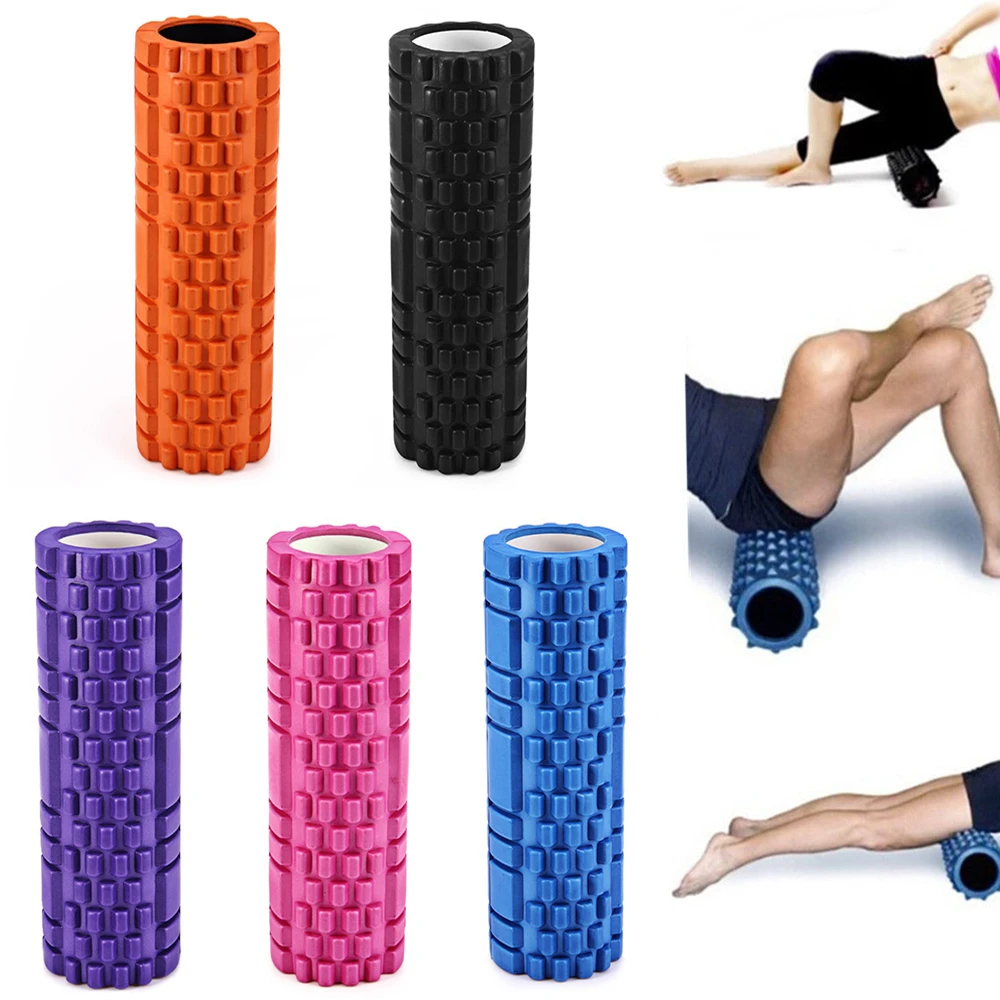
#2: Use a Foam Roller 10-15 Minutes Before Training

After just 10 minutes on a foam roller you will feel more limber and be able to perform your workout more effectively.
There’s a reason many pro athletes have deep tissue specialists work on them before games and practices. Such treatment breaks up knots in tissue, improves muscle quality, and increases mobility.
Most of us don’t have access to such experts, but thankfully we can get an effective "poor man’s massage" in the form of one of those long, foam tubes that likely are sitting in the corner at your gym gathering dust.
After just 10 minutes on a foam roller you will feel more limber and be able to perform exercises more effectively.
A simple way to foam roll is by starting from the bottom and working your way up.
Sit on the floor with your legs straight out and the foam roller under one of your calves. Using medium pressure guide your body over the foam roller so it works it’s way over your calf muscles 6 to 8 times. Then switch over to the other calf.
If you find an especially tense area, hold the foam roller there until the tension dissipates.
Use this same technique on your hamstrings, glutes, middle and upper back, lats, quads and chest. Do not foam roll over joints (like the back of your knees) or your lumbar spine (lower back), which can put you at risk for injury.
#3: Do Dynamic Mobility Work 5-10 Minutes Before Training
There’s nothing wrong with static stretching, those traditional stretch-and-hold movements we did for 30 seconds apiece in high school gym class. But just as a warm rubber band stretches more easily than a cold one, we’ll save static stretching for after our workout.
Prior to training, we’re going to focus on dynamic mobility, full body movements where the stretch is held for only one to two seconds in each position. Recent research has shown that those who engaged in dynamic warm-ups produce greater long-term gains in mobility and flexibility, along with strength than those who do static stretching or skip the warm-up altogether.
You either can develop a dynamic mobility routine to do before every training session or pick movements that work on the muscles that you will train that day. Either way, including 5 to 10 minutes of dynamic mobility work will elevate your heart rate and prime your muscles for the workout ahead.
Effective dynamic movements to include before you train are the Elbow-to-Instep stretch, which fires up the glutes, hamstrings, calves and ankles, a Scapular Wall Slide for your scapulae and shoulders, and a Side-Lying Extension-Rotation for thoracic spine mobility (see links at the end of this article for video demonstrations of each).
#4: Do a Workout-Specific Warm-Up at the Beginning of Training
Performing warm-up sets at 40 to 70 percent of your one-rep max for each of the major lifts you plan to do is an effective way to prevent injury, prime the nervous system and improve performance during your “work” sets.
If, for instance, your two big lifts of the day are the front squat and the bench press, you should perform two to three warm-up sets for each movement in the same range of repetitions that you are going to use during the workout.
So if you are planning to front squat 185 pounds for 6 reps, begin with a set of 8 at 95 pounds, then a set of 6 at 135 and finally a set of 4 at 160. This will provide the proper balance of being primed for your work sets without being fatigued by performing too many warm-ups.
A rule of thumb is the closer to your max you are attempting to lift, the more warm-up sets you should do.
http://www.livestrong.com/article/557765-4-things-you-should-do-before-every-workout/
Saturday, 3 December 2016
GET SIX-PACK ABS IN 6 SIMPLE MOVES
Try these 6 quick exercises to get the washboard abs you've always wanted.
The hallmark of fitness is a nice six pack, because it not only represents a certain level of effort in the gym, but also maintaining a relatively low bodyfat percentage.
THE WORKOUT PROGRAM
Perform one set of each exercise 3 times a week. These exercises are of sufficient difficulty that one set will be a good start. Shoot for a rep range of 8-12. Once you can consistently get 15 reps with good form, and still make it through the workout, add another set.
Rest: 90-120 seconds
1) THE PIKE
Lie faceup with your legs straight, arms at your sides, palms facing down. Raise your legs and torso 45 degrees off the floor. (You should look like a "V".) Reach your hands alongside your legs as high as you can without rounding your back.
Key Point: This one is tough, but focus on contracting the abs to move your body.
Key Point: This one is tough, but focus on contracting the abs to move your body.
2) CABLE SIDE BEND
Attach a D-handle to a low-pulley cable and stand so your left side faces the weight stack. Grasp the handle with your left hand, keeping your arm by your side, and place your right hand on your hip. With your head facing forward, slowly bend to the left. Return to standing, repeat for reps, then switch sides.
Key Point: Granted, obliques aren't abs, but this movement is an integral part of any ab workout.
Key Point: Granted, obliques aren't abs, but this movement is an integral part of any ab workout.
3) WEIGHTED CRUNCH
Lie faceup with your knees bent and feet flat on the floor. Extend your arms toward your knees, holding a lightweight plate with both hands. Keeping your arms extended, slowly lift your head and shoulders off the floor moving into a full crunch.
Key Point: Again, focus on contracting your abs to do the work. Use a light weight and anchor your feet if needed.
Key Point: Again, focus on contracting your abs to do the work. Use a light weight and anchor your feet if needed.

4) OVERHEAD CRUNCH
Lie faceup with your knees bent, feet flat on the floor and arms extended overhead with your hands clasped together. (Your upper arms should be alongside your ears.) Keeping your arms straight and alongside your head, curl your torso forward, raising your shoulders off the floor. Pause, then return to the start.
Key Point: Another great way to hit the abs with extra overload. Perform shortly after the Weighted Crunch for a deep burn.
Key Point: Another great way to hit the abs with extra overload. Perform shortly after the Weighted Crunch for a deep burn.

5) BALL PLANKS
Get into a push-up position on an exercise ball: hands shoulder-width apart on the floor and your legs extended behind you, feet up on a ball. Maintain a straight line from head to toe, and push back slightly such that your arms are out in front of you. Hold this position for up to 60 seconds.
Key Point: This ain't your grandma's plank. Your abs and entire midsection will be screaming by the end of this.

6) WINDSHIELD WIPERS
Lie faceup and tuck your hands under your pelvis, palms down. Keeping your legs straight and feet together, raise your legs so your heels point toward the ceiling. With your head and shoulders flat on the mat, lift your glutes off the floor and lift your feet toward the ceiling. At the top of the movement, twist your hips to the left (your feet should point to the left). Lower your legs back to the start (feet suspended off the floor), then lift up and twist to the right. Alternate sides for reps.
Key Point: A great way to finish off your abs. Start with your hips on the ground if needed and progress to the exercise as described.
Key Point: A great way to finish off your abs. Start with your hips on the ground if needed and progress to the exercise as described.

http://www.muscleandfitness.com/workouts/abs-and-core-exercises/get-six-pack-abs-6-moves?page=2&utm_source=outbrain2&utm_medium=cpc
Sunday, 27 November 2016
Why Are Muscles Sore After A Workout?
Explaining the Effects of Delayed Onset Muscle Soreness (DOMS)
We’ve all had those days after an intense workout where all you want to do is curl up into a little ball and never move. Your muscles feel tight, stiff and make getting out of bed feel just plain terrible. So what causes our body to become sore after a workout?
Soreness results when you workout or do physical activity that is greater than normal. It is known that you body’s eccentric muscle contractions, cause more soreness in the days following the workout than either isometric contractions or concentric contractions. Okay, that was a quite the mouthful! So, what do those things even mean? Let’s take a step back for a moment and break it down.
- Eccentric Muscles: The muscles that lengthen when you are lowering a weight for example.
- Isometric Muscles: The muscles that does not change length. For example, like when you are holding a weight.
- Concentric Muscles: The muscles that shorten like when lifting a weight for example.
You’re probably asking “why do your eccentric muscles cause the most pain?” I’ll be getting to this in a moment, first, let me explain more about what you are experiencing. The soreness you are feeling in the days after your intense workout can be referred to asdelayed onset muscle soreness or “DOMS.” Your muscle mass is always being broken down, and is also always being synthesized at some point. When you work out, the stress that you are putting on the muscles activates chemicals that causes your body to build up your muscle tissue. If you feel soreness or the “tearing” as some refer it as, you are noticing one of the signs of this chemical process. There are many other things that affect the way your body responds to physical activity. Some of these include metabolic, hormonal, and dietary changes that function in various ways.

If you’re currently looking for ways to massage your muscles or relax them after an intense workout, I’d suggest checking out the Trigger Point Total Package. With the Trigger Point Kit’s patented design mirroring the feeling of a human hand, you are able to massage almost any part of the body safely and effectively on your own. If you’d like to learn more about this product, click the image on the left or visit the Fitness Town website.
“No Pain, No Gain” Misconceptions.
One of the biggest misconceptions is the saying “no pain, no gain.” Some believe you need to workout until your muscles feel sore or exhausted. I definitely disagree with this belief, I believe you do not need over-do it for them to grow. While working your muscles until they’re achy means you technically did tax your muscles, which helps them get stronger, it’s actually not beneficial in the long run. So why do eccentric muscles hurt more than others? DOMS tends to begin 24 to 48 hours after exercising and you can feel the discomfort peak between 48 to 72 hours. Studies have shown that eccentric muscle activity, which is actively resisting lengthening of the muscle (like raising or lowering a weight), gives the most discomfort. When overworked, DOMS could be due to high tension on muscle fibers and connective tissues which is less common in isometric, concentric, or static tension activity.
Consistency is Key!
At Fitness Town, we believe that keeping active on a daily basis is important. Pushing your muscles past your comfort line on one day means your muscles are going to feel extremely exhausted for days after. This means when you go to workout the following day, you’ll be more likely to skip your routine. I find more often than not that many people struggle with keeping up with their fitness routines overtime. This is why it becomes a very big issue! Why? Well, because when getting back into shape, consistency and determination is key! Personally, I believe it is about developing and learning how to maintain a different lifestyle. It is easier to do this by working out less intensely every day, than to go all out on one day and dread every second of the few following days. Ultimately, if you dread the effects of your workout, you are going to be less motivated to continue on with your fitness goals. If you’re looking for something that will speed up your recovery time and give you that extra “umph,” I suggest looking into PurePharma.
Cons of Over-doing It.
Picture this, you have overdone your previous workout to the point you feel like you’re in a full-body cast. You then decide to lay on the couch while muttering all sorts of “I-hate-exercise” and swear words. Like I said previously, you can’t justify to yourself “I went hard a few days ago so I’ve done my time for the week.” Unfortunately for some, working out requires commitment. You can’t be a couch potato for the following 6 days of the week, that’s like one step forward and two steps back! Your muscles will respond better when they’re being constantly worked which allows them to gradually get used to your workouts. By doing this method, you’ll find that is will prevent your muscles from becoming weak and sore.

How Can You Tell You’re Over-doing It?
So, how can you tell when you’re overdoing your workout? If you are into weightlifting and find yourself starting to shake, twitch, get restless, or numb during your reps, that’s a sign you might be hurtin’ tomorrow! If you do find yourself in this situation, I suggest you step farrrrrr awaaay from the weights. Instead of continuing to workout that area of your body, move on to a different area of your body. As soon as you start feeling noticeably exhausted, I would suggest you end your workout session. This way you ensure that DOMS does not get the best of you and instead, you can workout comfortably the following day or so. Remember, the key to successfully reaching your fitness goals is to…
http://blog.fitnesstown.ca/muscle-soreness
Subscribe to:
Posts (Atom)