Showing posts with label Building Muscle. Show all posts
Showing posts with label Building Muscle. Show all posts
Wednesday, 1 November 2017

Thursday, 14 September 2017
Five Tips to Help You Lose Weight

The obstacles to losing weight, however,
are not insurmountable. The National Weight Registry is tracking over 5,000 individuals
who have lost an average of 66 pounds and kept the weight off for five years.
Insights from their success stories are consistent with these five tips from
Dr. Rankin:
1.)
Focus on a change of heart, not a change of mind. Losing weight through changing
what and how much you eat doesn’t happen because you rationally decide to lose
weight. You have to have a change of heart; that is, you must get in touch with
your deepest, heartfelt desires.
Your motivation
may not be positive. Indeed, it may stem from a fear of loss. For example, you
may not want to get sick. Or you may not want to be ostracized. To get in touch
with your motivation, think about the negative consequences of not changing as
well as the positive ones. Getting fit must become a priority and your life
must be organized accordingly. Nobody can change you but you, and once you’ve
made the changes, you need to stay focused. Successful individuals keep their
motivation in the forefront of their minds all the time.
2.)
Practice self-discipline. Self-control is a muscle that, like other
muscles, needs exercise and strengthening. Change doesn’t happen because you
want it to happen. Each time you resist temptation, you are developing greater
self-control. Success breeds success. Facing down temptations builds strength
for future decision moments. Some of my clients throw away their favorite food
as a symbolic act that shows they have control over the food and not the other
way round.
Self-discipline
is required for behavior change, but does that mean that the lack of
self-discipline causes obesity? No. That would be like saying aspirin helps a
headache go away, so headaches are caused by a lack of aspirin — which is
nonsense!
3.)
Eliminate or reduce sugary, fat-laden foods. Such foods create physical changes
at a cellular level that alter how our brains and bodies react. When analyzing
your level of addiction, consider both physical dependence (changes at the
cellular level) and psychological dependence (the habitual repetition of a behavior
in an attempt to satisfy an emotional need). For example, how often do you use
a sugary treat to lift your spirits?
What is often
misunderstood is that these dependences exist on a continuum. You can be
mildly, moderately or severely dependent, and the degree of dependence
determines how difficult it will be to change.

4.)
Make history your teacher, not your jailer. You can learn from your mistakes.
Instead of [beating yourself up] when you fail to keep your promises to
yourself, seek to gain self-knowledge so you won’t repeat the error. No one is
perfect. Be sure to acknowledge what you are doing right, not just what isn’t
working.
5.)
Surround yourself with friends, family and colleagues who will support your
effort. Getting
fit and losing weight absolutely require others. Although you alone can make
the changes you need to make, you can’t make the changes alone. Not only in
terms of eating, but in all areas of our lives, we are much more influenced by
other people than we imagine. One of the most potent forces for positive change
is the emotional support of the individuals who surround you.
You must, however, ask for the support
you need. Don’t assume that others know what would be most helpful to you.
Similarly, you need to avoid those people who aren’t on the same page as you.
Social pressure can work for you or against you. Hang out with the right
people.

Change is difficult, and whoever finds a
way to bottle and market motivation and self-discipline will make a fortune. In
the absence of such a product, however, the next best thing is helpful insights
into the process of changing our behavior.
Dr. Rankin reminds us that, for better or
worse, our core, emotional values will ultimately determine our choices. Once
we identify our heartfelt desires, we can use them to create a healthy
lifestyle that reflects our best self. Our deepest values can be summoned to
keep us on track, especially when we are facing temptations and distractions.
They can also serve as our compass when we go astray.
If we are willing to remain diligently
committed to our emotional values, we can be confident that we will succeed in
realizing our health and fitness goals. And when we do, maybe some of us will
go one step further and give support to family and friends so that they can
join us in becoming healthier and happier.

http://www.huffingtonpost.com/carole-carson/weight-loss-psychology_b_881706.html
Saturday, 9 September 2017
Friday, 11 August 2017
Thursday, 22 June 2017
4 Proven Ways to Build Strength & Power
Developing maximal strength adaptations is beneficial for everyone from elite athletes to the elderly and everyone in between.
Because strength is key for most of the population, human performance researchers and sports scientists have teamed up over the past few decades in order to determine how to maximize progress with the latest scientific training protocols.
Essentially these researchers have been looking for the safest and most effective way to manipulate certain variables of training such as load, intensity, volume frequency and exercise selection.
Within this article I will provide you with four of the most recent breakthroughs in human performance research to help YOU build maximal strength in the shortest possible time!
From increasing your squat to help your legs and glutes grow, to improving sports performance, the methods in this article will give you the background and knowledge you need to maximize your current workouts.
Here are 4 scientifically backed tips to help you build strength.
Background: Principles of Strength Training
Before we dive in, it’s important for me to give you a quick review of the basic principles of strength training.
While the latest training technique with bands or chains may seem sexy, like everything, the main principles of strength training that were discovered years ago that are still key today.
For example, here are some of the key and fundamental principles of strength training you must master and focus on:
- Load/weight on the bar,
- Number of sets,
- Repetitions,
- Changes in exercise selection,
- Rest period length,
- Careful manipulation of volume (sets x reps),
- Intensity … these must all be accounted for (1).
Essentially, in order to continually force your body to adapt to strength training, you have to train with sufficient loads that are going to challenge your musculoskeletal system.
Recent research suggests that for untrained individuals to maximize strength training adaptations they need to train with at least 60% 1RM, 3 days per week, 4 sets per muscle group.
However, for trained athletes, a mean training intensity of 85% 1RM, 2 days per week, 8 sets per muscle group has been shown to enhance muscular strength (2).
In short, you need to lift heavy, several times per week, progress the weights, stay consistent and eat well
Now we’ve covered the basics, you’re ready to take your strength training to the next level with these four tips!
1. Linear Periodization To Maximize Strength Gains
Periodization refers to the systematic (orderly) variation of key training variables.
There have been several different periodization models that have been shown to provide favorable strength adaptations (3).
The first model of periodization to gain traction was Linear or Traditional periodization. This consists of several training blocks starting at high volumes with low intensities and gradually progressing to periods of high intensity and low training volumes (4).
In less technical terms, you would start with lots of sets but less weight then switch to higher weight with less sets.
While this has been effective for many, linear periodization can be slightly boring within a training regimen due to infrequent variations or changes in exercises etc. Also, linear periodization may increase the athlete’s risk of overreaching as they repeat the same exercises etc. (5).
2. Non-linear or Daily Undulating Periodization To Maximize Strength Gains
Recent research has brought to light a new model of periodization referred to as nonlinear or daily undulating, in which volume and intensity are varied on a daily basis (rather than every 1-2 months like above).
For example, in a linear approach you may do 6 weeks of hypertrophy training, 4 weeks of strength training, followed by 3 weeks of power training. However, in a NON-linear or Daily Undulating Periodization approach you may perform a hypertrophy, power and strength workout all in one week!
This model of periodization seems to provide athletes with more frequent variations in volume and intensity and may reduce boredom, injury risk and actually result in improved maximal strength training adaptations as the body is provided with new and unique stimuli multiple times in one week.
In fact, one group of researchers directly compared traditional periodization to non-linear on maximal strength training adaptations.
27 strength trained men were split into three groups non-periodized, linear-periodized, and non-linear and each followed their respective training regimen for 12 weeks.
At the conclusion of training effect sizes revealed that non-linear periodization resulted in improved maximal strength training adaptations on the leg press and bench press
(4.6KG & 2.9KG VS 1.1KG & 0.6KG) respectively (6).
These results have been replicated on various occasions; another group of researchers ran a similar investigation and demonstrated average strength gains on the bench press and leg press to be 14.4% and 30.1% greater following a non-linear model (7)!
How to Apply Non-Linear Periodization to Maximize Strength
The benefits of a non-linear approach are that it provides the athlete or lifter more flexibility in organizing their workouts. If your goal is maximal strength on the “big three lifts”, an example routine following a non-linear approach is listed below.
Monday: Squat, Bench Press, Dead Lift – Hypertrophy
Wednesday: Squat, Bench Press, Dead Lift – Power
Friday: Squat, Bench Press, Dead Lift – Strength
3. Applying Resistance Bands to Maximize Strength Gains
Once you have your weekly routine planned out, another way you can maximize strength gains is by adding variable resistance training techniques such as elastic bands.
Elastic resistance bands have previously been shown to improve both strength and power adaptations in highly trained athletes.
In theory, overloading the eccentric portion (lowering) of a lift with added resistance from the bands may force the neuromuscular system to recruit more type two fibers, increasing maximal strength gains (8).
One study particularly applied resistance bands to a non-linear strength training plan. These researchers took 14 college athletes and split them into two conditions.
The control group followed the same workouts without resistance bands. However, the banded group added 30% of their 1RM in band tension on the back squat and bench press exercises on their power days.
After 5 weeks of training the resistance bands group demonstrated greater improvements in rate of power development, back squat 1RM and bench press 1RM (9)!
You can order these bands from stores such as EliteFTS or MyProtein.


4. Creatine Monohydrate to Maximize Strength Gains
Once you’ve effectively applied the basics including overload, progression, non-linear periodization and variable resistance training you’re ready for the final piece of the puzzle, creatine monohydrate!
Creatine is arguably the most effective and widely used sports supplement and rightly so.
Creatine works by increasing the amount of readily available ATP energy in the muscle. ATP is the energy system that fuels high power/strength activities, helping our muscles contract and produce force. It’s basically like the gasoline to your car, it provides all our cells with energy to function.
One group of researchers examined the effects of creatine supplementation on strength and strength endurance in highly trained power lifters.
At the conclusion of training, strength gains on the bench press increased by 20lbs in the creatine group compared to only 5.6 in placebo. That’s a 400% greater increase!
In regards to strength endurance, the creatine group demonstrated average increases of 39.7% compared to only 7.1% in the placebo, over 500% greater gains! (10)
But before you ask, this wasn’t just a one-off or poorly designed study. These results have been replicated time and time again and researchers conclude that creatine just may be the most effective supplement for strength and power gains as well as muscular growth (11).
In fact, research has demonstrated an average increase of 4.4lbs of muscle mass when taking creatine paired with resistance training compared to no creatine (12). It’s also extremely safe, cheap to buy (a bottle is $10) and healthy!
Time To Maximize Your Strength Gains!
There you have 4 effective and research-proven techniques to boost your strength. For most, working on the basics first will provide the biggest reward. If you are highly advanced, using techniques such as resistant bands, forced reps, cluster sets etc. can also help bust plateaus and provide quick improvements. Learn more about Advanced Training Technique tips in this article: https://www.rudymawer.com/blog/5-advanced-workout-methods-for-rapid-muscle/
- Before adding any special tips into your strength training regimen make sure you have your basic principles in check. These include the chronic alteration of load, number of sets, repetitions, exercise selection, order, rest period length and the careful manipulation of volume and intensity.
- Next, non-linear periodization or DUP provides you with more frequent variation of volume and intensity which has been shown to lead to improved strength adaptations (you may also enjoy it more as your routine changes within a week).
- Adding resistance bands to your big three lifts (squat, bench, deadlift) may help optimize strength and power development by providing added resistance throughout the entire strength curve.
- Lastly, supplementing with creatine will help you train harder and quickly improve your strength gains. It’s also extremely effective for adding muscle mass, safe, low in cost and provides health benefits.
1.) Kraemer, W. J., Adams, K., Cafarelli, E., Dudley, G. A., Dooly, C., Feigenbaum, M. S., … & Newton, R. U. (2002). American College of Sports Medicine position stand. Progression models in resistance training for healthy adults. Medicine and science in sports and exercise, 34(2), 364-380.
2.) Peterson, M. D., Rhea, M. R., & Alvar, B. A. (2004). Maximizing strength development in athletes: a meta-analysis to determine the dose-response relationship. The Journal of Strength & Conditioning Research, 18(2), 377-382.
3.) Stone, M. H., O’bryant, H. S., Schilling, B. K., Johnson, R. L., Pierce, K. C., Haff, G. G., & Koch, A. J. (1999). Periodization: Effects of Manipulating Volume and Intensity. Part 2. Strength & Conditioning Journal, 21(3), 54.
4.) Willoughby, D. S. (1993). The Effects of Mesocycle-Length Weight Training Programs Involving Periodization and Partially Equated Volumes on Upper and Lower Body Strength. The Journal of Strength & Conditioning Research, 7(1), 2-8.
5.) Zourdos, M. C. (2017). Physiological responses to two different models of daily undulating periodization in trained powerlifters.
6.) Monteiro, A. G., Aoki, M. S., Evangelista, A. L., Alveno, D. A., Monteiro, G. A., da Cruz Piçarro, I., & Ugrinowitsch, C. (2009). Nonlinear periodization maximizes strength gains in split resistance training routines. The Journal of Strength & Conditioning Research, 23(4), 1321-1326.
7.) Rhea, M. R., Ball, S. D., Phillips, W. T., & Burkett, L. N. (2002). A comparison of linear and daily undulating periodized programs with equated volume and intensity for strength. The Journal of strength & conditioning research, 16(2), 250-255.
8.) Anderson, C. E., Sforzo, G. A., & Sigg, J. A. (2008). The effects of combining elastic and free weight resistance on strength and power in athletes. The Journal of Strength & Conditioning Research, 22(2), 567-574.
9.) Joy, J. M., Lowery, R. P., de Souza, E. O., & Wilson, J. M. (2016). Elastic bands as a component of periodized resistance training. The Journal of Strength & Conditioning Research, 30(8), 2100-2106.
10.) Kelly, V. G., & Jenkins, D. G. (1998). Effect of oral creatine supplementation on near-maximal strength and repeated sets of high-intensity bench press exercise. The Journal of Strength & Conditioning Research, 12(2), 109-115.
11.) Buford, T. W., Kreider, R. B., Stout, J. R., Greenwood, M., Campbell, B., Spano, M., … & Antonio, J. (2007). International Society of Sports Nutrition position stand: creatine supplementation and exercise. Journal of the International Society of Sports Nutrition, 4(1), 6.
12.) Kreider, R. B. (2003). Effects of creatine supplementation on performance and training adaptations. Molecular and cellular biochemistry, 244(1-2), 89-94.
https://www.rudymawer.com/blog/4-tips-build-strength/
Tuesday, 20 June 2017
The Scientific Reason Women Need to Go Heavy
Tip: The Scientific Reason Women Need to Go Heavy
How heavy? Here's the science.
Luckily, most women aren't afraid to lift weights these days, but many still avoid going too heavy. We're talking about sets of around 3 maximal reps here. Too bad for them, because females may benefit from heavy training even more than men.
Growth Hormone and Female Lifters
It all comes down to growth hormone. Where the male body relies more on testosterone to reap the benefits from weight training, the female body relies a bit more on growth hormone. Natural growth hormone plays a big part in both muscle and bone development. It also improves metabolic function and staves off tissue breakdown.
So, GH is good. And heavy lifting stimulates more growth hormone release in women.

The Study
One study on women looked at the effects that different kinds of weight training had on growth hormone. Researchers found that growth hormone was responsive to moderate (around 12 reps) and heavy (around 3 reps) lifting regimens.
"Since women rely on growth hormone to increase muscle and bone strength, the more growth hormone stimulated by a type of exercise, the better its outcome," researchers said.
The study had women weight training with different rep ranges for 24 weeks, complete with lots of blood tests. The heavier weight training protocols produced more biologically active growth hormone. Lead researcher William J. Kraemer noted: "Women need to have a heavy loading cycle in their resistance training routines."
Now, there's muscle-building value in lifting lighter weights too, like increased time under tension. But this study tells us that women shouldn't get stuck in the pattern of using only higher rep schemes and "going for the burn." Those heavy sets, as heavy as 3 grunting reps, may be where a lot of the magic happens.

https://www.t-nation.com/training/tip-the-scientific-reason-women-need-to-go-heavy
Sunday, 18 June 2017
Are You Strong Enough to Run? Part 2
As a runner you may think that strength training doesn’t necessarily apply to you as running is all you need to either stay or get in shape. I had that thought once, and it didn’t work out too well for me. Achy knees and a lot of hip pain from poor mechanics. Don’t let my mistake be your downfall. Let’s learn from it.
Mechanics or Phases of Running
Breaking down the mechanics of a stride, it’s a series of single leg exercises, with 2 different phases:
Stance- This is where the all your bodyweight is on a single leg and typically where breakdowns occur. This phase can also be broken down into smaller phases:
Initial Contact- Your foot first hits the ground, and as you touch down, the knee and ankle flex a little to absorb the force of the ground, and the foot pronates or turns in slightly. This can create the first break down if we don’t have a requisite amount of strength or motor control.
Midstance- Once the foot and leg are underneath the hip, you enter what is the midstance phase. This is where all your weight is on the one leg. Again, there is potential for injury here. An over pronation at the foot can cause a chain reaction up the leg into the knee and hip. Hip stability is also vital here as you need to be able to load the base leg in order to set yourself up for the propulsion phase. It’s a basic load and explode situation. Your muscles, tendons, and fascia are all storing up elastic energy from the previous phase, waiting to use it. Lacking necessary joint stability and strength will hinder your stride, and really, your ability to run efficiently.
Propulsion- The final stage where the foot starts to come off the ground, starting with the heel. This is where you will use all that stored/absorbed energy and push off to get into the next phase. The ankle, knee, and hip all go through extension in order to achieve this. Additionally, your foot/ankle should supinate, however this doesn’t always occur due to poor mechanics or poor shoes. Either way, this is another instance in which we need to corrections during running.
Swing- From the moment your foot loses contact with the ground, till the moment it touches down again is the swing. In this phase, your body needs to prep the leg and foot for that initial contact phase again.
There is a third phase where both feet are simultaneously off the ground, and if you freeze frame a runner, they appear to be floating or hovering off the ground.
So as you can note above, each phase of running comes with the potential for injury if the right mechanics aren’t in place. This means a combination of strength, stability and mobility. Thankfully we can incorporate strength training that focuses on those three aspects, and we can likely avoid injury or any aches and pains. Then we can get back to doing what we love, which is running.
The Training
Putting together a strength program for a runner is a little tricky as you want to build as much strength as you need to avoid injury and resist the forces of running, but without putting on weight that may potentially slow you down.
Single Leg Exercises– Being that running is largely a single leg exercise repeated over and over again, it’s important to include these into your program. That doesn’t mean eliminating bilateral exercises like squats and deadlifts, as those will set a large strength base. It just means adding in more single leg variations to maintain or improve hip stability.
Examples:
Lunges
Single Leg Deadlift
Step-up
Split Squats
Core Strength & Stability– Everyone uses these terms, but no one really knows what they mean. In terms of running, the core needs to be strong and stable in order for the body to transfer forces from the lower body to the upper body, otherwise we just look like one of those wacky inflatable tube guys outside car dealerships. And no one wants to look like that when they run. Nor do we want to have any injuries or pain when we’re running. If we lack the necessary core stability, meaning the control of the movement of the hips, it could result in hanging out on passive structures instead. Have you ever gone for a run and your back was killing you halfway in or when you finished? Yea that’s one, poor mechanics, but also lack of muscular strength and the ability to stabilize the hips.
Examples:
Anti-Extension – Plank
Anti Lateral Flexion – Side Plank
Bird/Dog
Anti Rotation – Pallof Press
Chops

Hip Extension Activation & Strength– The main mover for hip extension should be the glutes, however many end up predominantly using their hamstrings. Hamstring injuries occur in part because they aren’t strong enough to control the eccentric contraction of the muscle, meaning a contraction as the muscle lengthens. But also because the hamstrings compensate for a lack of glute strength. It’s vital to the health of your hamstrings to get your glutes strong. Then you can focus on strengthening the hamstrings via eccentric exercises.
Glute Bridge
Hip Thrust
Lateral Band Walks
Clamshells
Supine Hip Extension
Nordic Curls
Hamstring Curls via TRX, Glide Discs, Stability Ball
Running is a simple way to exercise and probably one of the most accessible to those of all levels, from beginner to advanced. Now that the weather is getting nice, more and more people will be out there running. Just because you can run, doesn’t mean you have to run or should. Take account of your strength and stability, but also look at your own mechanics to see if running is for you. Then you can move on to what could be the most important, whether or not you actually enjoy running.
http://amp-training.com/are-you-strong-enough-run/
Saturday, 17 June 2017
Are You Strong Enough to Run? Part 1
What does strong enough mean? Or in the case of this title, strong enough to run? Would deadlifting 200lbs make you strong enough to run? Maybe, maybe not. When it comes to running and being strong, expressing strength is more a matter of resisting forces put on it, than creating them. although you will create force into the ground to push you forward.
Everybody runs or can run, but not everyone that runs does so efficiently with good form. Sometimes it looks a little wonky, like Elaine Benes trying to dance or like a calf trying to walk for the first time. While running is a natural movement (for some), it does require a number of things to work synergistically so as not to get injured. How often are you thinking of stride length, frequency, how your foot is landing, hip shifts, arm movement, etc when you go for a simple run or jog. Or maybe its yogging, it might be a soft ‘J.” Probably never.
Strength has more to do with running than you think, and it doesn’t just stop at the legs. Think of running as a full body exercise, where all your muscles are coordinated to fire to ensure you absorb the forces appropriately. And if there is a weak link in the chain, you can bet that your body will find it, and expose it.
Everyone can run, but not everyone SHOULD…..right away.
Thursday, 15 June 2017
Perfect Posture
Forget Perfect Posture: It Doesn’t Exist
In this five minute video, Dr. Greg Lehman challenge common beliefs and correct myths about biomechanics and posture using current research.
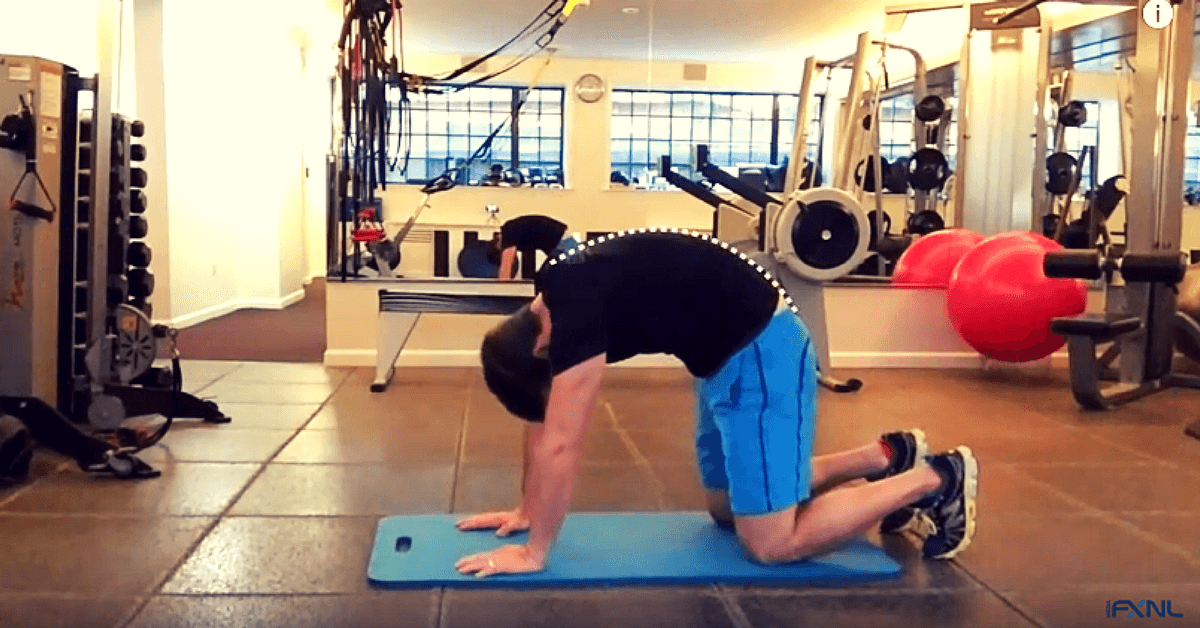
Most of us know what the ideal posture looks like: a nice, neutral spine and neck and no tilt in either direction in the pelvis.
But the real question is: Does this posture really exist in the real world?
Is it possible that we focus too much on its role in healthy movement and pain? Check out this video and find out.
https://www.theptdc.com/2017/04/no-perfect-posture/
Wednesday, 8 March 2017
15 Super-Effective Stretching Exercises for a Fit and Fabulous Body

Stretching is an important element of any exercise regime that we need to keep ourselves healthy. Whether you’re an athlete or an office worker, everyone can benefit from a stretching routine. It improves your posture, increases your range of motion, and can even prevent injuries and reduce muscle soreness.
We here at Bright Side have put together the following list of 15 super-effective and easy-to-follow stretching exercises that will help you keep fit and healthy. Enjoy your training!
Exercise #1

- How to perform: Straighten your neck as much as you can. Slowly tilt your head to the right, trying to touch your right ear to your right shoulder. Repeat for the other side.
- Benefits: this exercise helps to stretch and strengthen the sternoclavicular, mastoid and upper trapezius muscles.
Exercise #2

- How to perform: keep your back straight, lace your fingers together behind your head and very gently push it downwards with your interlocked hands. Try to touch your chin to your breast bone.
- Benefits: this exercise helps to stretch and strengthen the sternoclavicular, mastoid and upper trapezius muscles.
Exercise #3

- How to perform: stand on one knee and slowly push your right hip forward. Grasp your left foot with your hand behind you and tighten your gluteal muscle.
- Benefits: this pose is great for stretching your knees and strengthening the hamstring muscles.
Exercise #4

- How to perform: stretch your right arm across your body. Use your other arm to pull the arm that’s being stretched toward your body.
- Benefits: this exercise helps to stretch the shoulders and strengthen the neck muscles.
Exercise #5

- How to perform: Bend your right knee and place your right foot flat on the floor on the outer side of the left thigh, as close to the pelvis as possible. Put you right hand behind your back and grasp your right knee with your left hand. Then, alternate the legs.
- Benefits: this pose helps open up the thoracic cage and elongates the muscles of the neck, shoulders, back and hips as well.
Exercise #6

- How to perform: start in the plank position, then move your left foot towards your hands. Feel the tension in your hips. Return to plank position and repeat with your right leg.
- Benefits: this exercise is great for strengthening and elongating the muscles of your hips and ankles.
Exercise #7

- How to perform: lie on your back, bend your knees up and move them over to your right side, slowly rotate your torso in the opposite direction.
- Benefits: This exercise improves mobility in your back, elongates your spine and stretches your thighs, chest, shoulders and upper back.
Exercise #8

- How to perform: sit back onto your heels, put your hands behind your back and push your hips up and forward. Be careful not to overtax your lower back. If you have problems with your neck, don’t drop your head back.
- Benefits: the pose will allow you to strengthen your internal and external obliques.
Exercise #9

- How to perform: Lie on your back, with your knees bent and your feet hip-width apart. Slowly and gently lift your back off the floor. Keep your feet and the tops of your shoulders pressed down toward the floor.
- Benefits: the move stretches your chest and neck muscles and elongates your spine. It calms the nervous system and relieves stress as well.
Exercise #10

- How to perform: lie on your side, prop your head up with your hand, bend your right knee and bring it towards your buttocks.
- Benefits: this exercise helps to eliminate pain in your knees.
Exercise #11

- How to perform: begin in a sitting position and slowly pull your leg towards your chest while rotating your hip and keeping your back straight.
- Benefits: the exercise helps you to work your glutes.
Exercise #12

- How to perform: sit on the floor with your legs straight in front of you and the muscles in your feet flexed. Lean your torso forward and grasp your feet with your hands. Keep your lower back straight and try to make your belly button reach your thighs.
- Benefits: this pose calms the nervous system, relieves stress, elongates your spine, and works the muscles in your shoulders and the back of the thighs.
Exercise #13

- How to perform: grasp your left ankle with your right hand and try to pull your foot towards your buttocks as close as possible. Keep your back straight.
- Benefits: do this exercise to stretch the muscles in the back of your thighs.
Exercise #14

- How to perform: clasp your hands behind your back and slide them as far up the back as possible, without causing yourself any pain; then lift your hips up and away from your upturned heels. Let your forehead rest on the floor.
- Benefits: perform this exercise to stretch your neck and shoulder muscles. It will help you to reduce headache and drowsiness as well.
Exercise #15

- How to perform: press the heel of one foot into the floor and your toes into the wall. Feel the tension in your feet as your press your toes down. Then, alternate the legs.
- Benefits: this exercise is a great way to stretch the calf muscles.
Remember: overstretching can harm your body. Stop and correct your technique if you feel any sharp pain. Try to do these exercises naturally and carefully without overtaxing your muscles. It is also important to watch your breathing.
https://brightside.me/inspiration-health/15-super-effective-stretching-exercises-for-a-fit-and-fabulous-body-122955/
Tuesday, 7 March 2017
3 Great Exercises to Help You Get the Perfect Behind

It’s impossible to imagine a having a beautiful figure overall without the presence of a beautiful behind. The good news is that you don’t need to go to the gym all the time to achieve this — you can manage it just as easily by doing a workout at home, provided it’s the right one.
All you need for this however is a pair of dumb-bells (or heavy books), a yoga mat, and a strong enough desire for self-improvement.
This particular exercise scheme to get the perfect behind was developed by fitness trainer Angela Lee, who suggests that you should maintain it for thirty days.
Timetable:

The numbers in each box indicate the number of reps you should do for each day that the scheme lasts. You should do the workout in bursts lasting for 2-3 minutes, with a break of 1 minute imbetween. The workout should never take longer than about 11 minutes ever day. And don’t ignore the days when you should be resting — your muscles need time to regain strength.
1. The basic exercise

2. The exercise with dumb-bells

For this exercise you need to stand straight, with your legs placed slightly wider than shoulder-width apart and facing outward. Holding a dumb-bell in both hands and keeping your back and your arms straight, do the same squat into the sitting position as in the basic exercise. First use lighter ones, then gradually replace them with three- or four-kilogram ones. If you feel excessive tiredness after a few reps, slowly place the dumb-bells on the floor and use lighter ones.
3. The complex exercise

Stand up straight, with your legs placed slightly further apart than the width of your shoulders. Keeping your back straight and with your hands placed on the back of your head (and your fingers laced together), perform the squatting exercise. Make sure you that your feet are pointing out slightly and not directly lined up with your knees. Don’t push against your neck with your hands, and don’t lean your head forward. You should be able to feel that you are exercising the muscles in your back. You shouldn’t be able to see your elbows in your peripheral vision.
https://brightside.me/article/three-great-exercises-to-help-you-get-the-perfect-behind-10905/?utm_source=fb_brightside&utm_medium=fb_organic&utm_campaign=fb_gr_brightside
Subscribe to:
Posts (Atom)